Swimming in a Cenote: What to Expect in the Riviera Maya
What a cenote actually is, what the water feels like, the rules that matter and
why they exist — and what changes when the cenote is where you are staying.
Almost everyone who comes to the Riviera Maya swims in a cenote. Very few know
what one actually is before they get in, and fewer still know why the rules exist.
None of it is complicated. But knowing it beforehand changes the experience from a photo stop into
something closer to what the place actually is.
What a Cenote Actually Is
A cenote is a natural sinkhole. The Yucatán Peninsula sits on porous limestone, and rain filtering
through it has carved an enormous network of underground rivers and caves over millions of years.
Where the rock ceiling collapsed, the water below was exposed. That opening is a cenote.
The word comes from the Maya dzonot, usually translated as “sacred well”. For
the Maya they were not scenery. They were the region’s only reliable fresh water — the
peninsula has almost no surface rivers — and they were understood as openings to the
underworld, used for ceremony and offering.
You are swimming in the top of an aquifer, in water that has been filtered
through rock for a very long time.
What the Water Is Actually Like
Three things surprise most first-timers.
24–25°C
It is cool, and it stays cool
The same all year, in every cenote, in every month. That sounds warm
on paper — it is not, after a week in Caribbean sea water closer to 28 °C. Fresh
water also pulls heat from the body faster than salt water. Most people acclimatise within a few
minutes.
0%
It is fresh water, not salt
No salt on the skin, no stinging eyes, and noticeably less buoyancy
than the sea. If you are used to floating easily in the Caribbean, you will feel the
difference.
20m+
The clarity is unlike anything coastal
With no sand or algae in suspension, visibility is often measured in
tens of metres. Looking down at limestone far below you, in perfectly still water, is the part
people remember.
Depth varies enormously and is rarely obvious from the surface. Assume it is deeper than
it looks.
The Three Kinds of Cenote
Not all cenotes are the same experience, and knowing which type you are heading to avoids a
mismatch.
Open
Fully collapsed: a pool under open sky, often ringed by jungle and
hanging roots. The most swimmable and the most photographed.
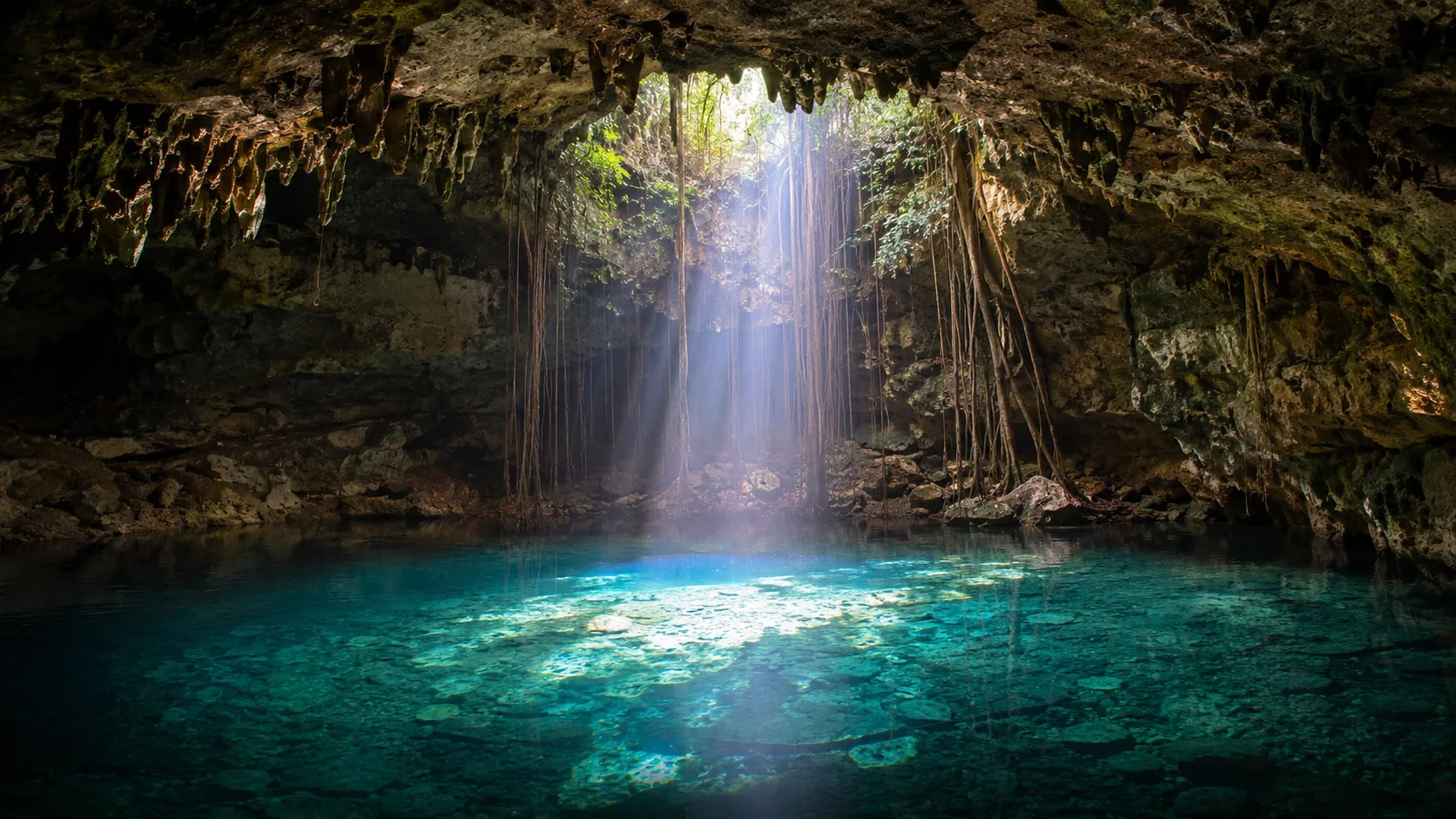
Semi-open
Partly roofed by remaining rock. Half daylight, half cavern, with
dramatic shafts of light.
Cave
Almost entirely underground, reached by stairs into the dark. Cooler,
quieter, more atmospheric, and usually the least comfortable for casual swimmers.
If you are travelling with children or nervous swimmers, an open cenote is almost always the right
first one.
The Rules, and Why They Exist
Every cenote you pay to enter will ask you to shower before getting in, and most will restrict or
ban sunscreen. It is easy to read that as bureaucracy. It is not.
Conventional sunscreens contain compounds — oxybenzone and octinoxate among them — that
act as endocrine disruptors in aquatic life. In Quintana Roo, only biodegradable sunscreen is
permitted at cenotes, beaches and parks. Mineral formulas using zinc oxide or titanium dioxide sit
on the skin as a physical barrier instead of dissolving into the water.
In practice, the simplest approach is to apply nothing at all and wear a UV rash guard. It removes
the question entirely.
The other common rules follow the same logic: rinse off before entering, do not touch the rock
formations, and stay in the marked areas. Stalactites take centuries to form, and skin oils stop
them growing.
What Visiting One Actually Involves
A public cenote visit is straightforward, but it has moving parts worth knowing about.
Entrance fees typically run somewhere between 150 and 650 pesos per person,
depending on the facilities and how protected the site is.
Bring cash. Many cenotes do not take cards, and the ones that do are the
exception rather than the rule.
Life jackets are commonly available, and at some of the better-known cenotes
they are mandatory and included in the price.
Go early. The popular cenotes near Tulum and Playa del Carmen fill up by late
morning in high season. The difference between arriving at opening and arriving at midday is the
difference between a quiet swim and a queue.
Facilities vary wildly. Some sites have lockers, showers and a restaurant.
Others have a rope, a ladder and an honesty box.
What Changes When the Cenote Is Where You Are Staying
Everything above describes visiting a cenote. Staying at one is a different proposition, and the
difference is mostly about friction.
There is no drive, no opening time and no closing time. No entrance fee, no queue at the changing
rooms, and nobody waiting for their turn on the ladder. Swimming at seven in the morning, or after
dinner, becomes possible — and those are the hours when a cenote is at its best and when a
public one is closed.
It also removes the planning. A cenote visit is usually a half-day commitment that has to be
scheduled around everything else. A cenote in the garden is something you drop into for twenty
minutes between other things.
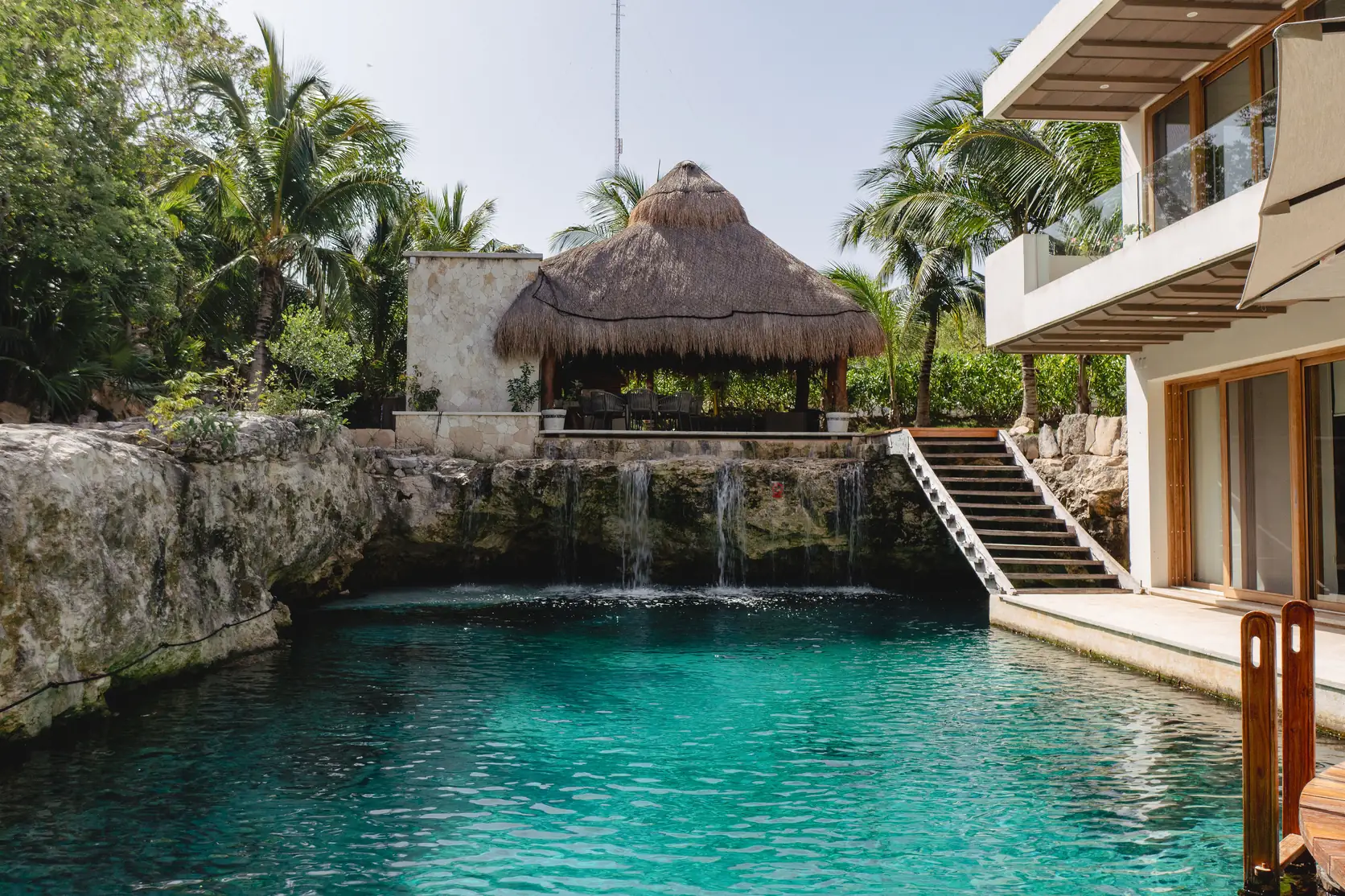
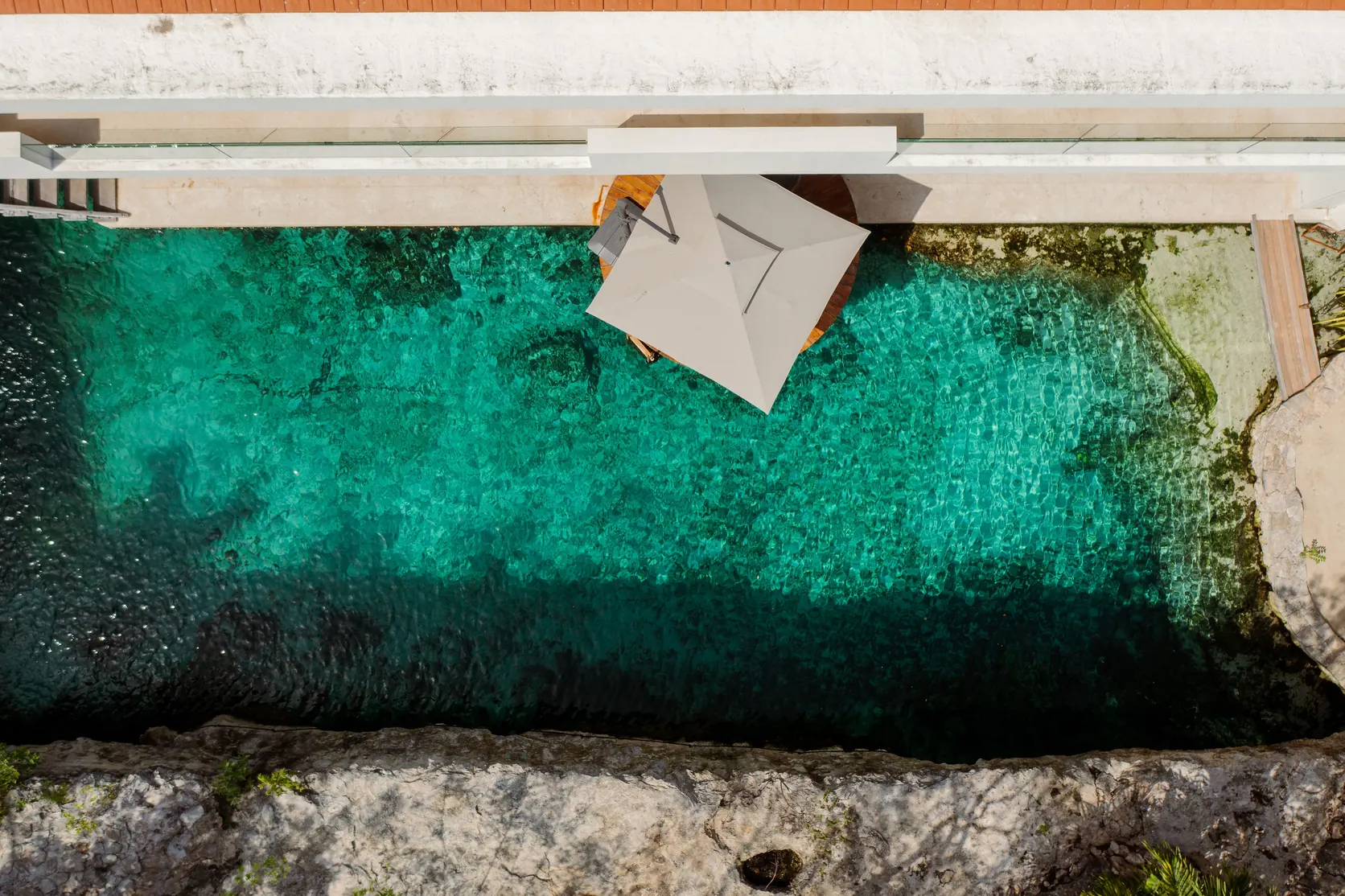
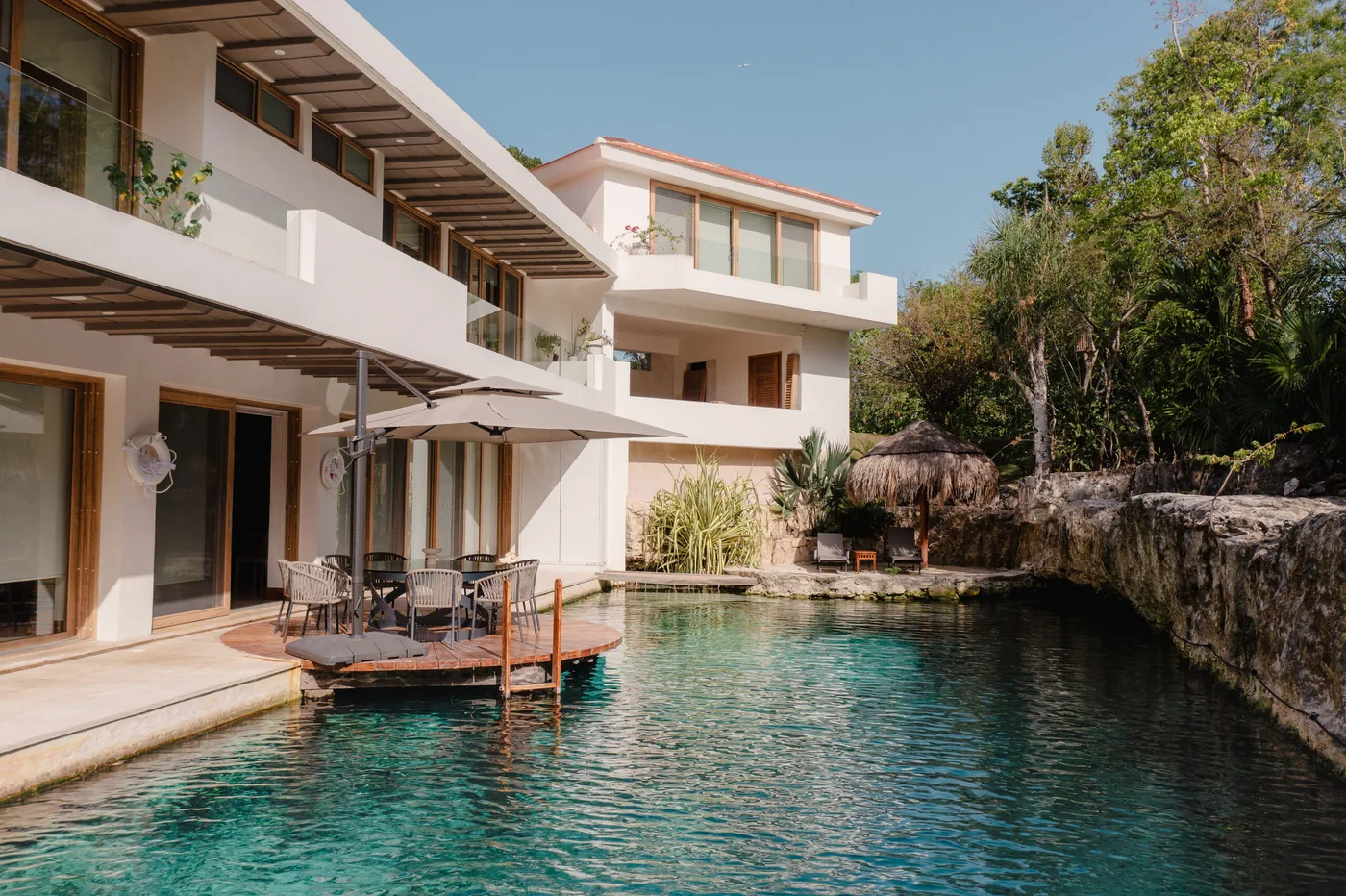
Casa Piedra de Agua is built around
its own cenote, with the terrace and the water
on the same level. For families and groups that tends to reshape the day: the adults stay put, the
children are in and out of the water all afternoon, and nobody is managing an itinerary.
Frequently Asked Questions
Are cenotes safe to swim in?
Yes, for ordinary swimming in the designated areas. They are natural formations, so depth is
uneven and often greater than it appears, though there is no surf or current to contend with.
Life jackets are widely available and worth using with children. Cave diving in the deeper
systems is an entirely different activity that requires specific certification.
How cold is the water?
Around 24–25 °C year-round. It feels colder than that after a week in the Caribbean,
but most people adjust within a few minutes.
Can I wear sunscreen in a cenote?
Only biodegradable mineral formulas, and many sites prefer none at all. The simplest solution
is a UV rash guard and no sunscreen, which sidesteps the issue entirely.
Do I need to know how to swim?
Not for most open cenotes, where life jackets are available and there are shallow entry areas.
Cave and semi-open cenotes with deep water and no shallow edge are less forgiving.
What should I bring?
Swimwear, a towel, water shoes for rough limestone, cash for the entrance, and a dry bag if you
are carrying a phone. Leave the conventional sunscreen behind.
Worth Understanding Before You Get In
A cenote is not a scenic swimming pool. It is a window into the water system that made this part of
Mexico habitable, and the reason the rules feel strict is that a great deal depends on them.
Knowing that does not make the swim less enjoyable. It tends to make it better.