Under4
Water, sand and shade
Somewhere to swim within walking distance of where you sleep. Shade and naps decide the day.

Riviera Maya · Travelling as a group
The hard part is never the destination. It is that one day has to work for a four-year-old and for someone in their seventies.
The hard part of a multigenerational trip is almost never the destination. It is that one itinerary has to work for a four-year-old and for someone in their seventies on the same afternoon, and those two people want opposite things from a day.
One needs a nap at two o'clock. The other has been awake since five and wants the morning to count. One is bored by anything that involves sitting still. The other would happily read in the shade for three hours. Most travel advice quietly assumes a group of one kind of person, which is why it stops being useful the moment your group is not.
The Riviera Maya handles this better than most warm-weather destinations. It also has three specific frictions that catch people out, and they are worth knowing before you book rather than after.
Most travel advice quietly assumes a group of one kind of person, which is why it stops being useful the moment your group is not.
Three things, and none of them are about the region being difficult.
The heat does not negotiate. Average maximums in the warmest months sit around 33 °C, and a heat that an adult finds pleasant is a heat that makes a small child miserable and an older traveller unsafe. This is the single biggest thing that separates a good group trip here from an exhausting one, and it is entirely manageable if the plan respects it.
Everything is further apart than it looks. Tulum, Playa del Carmen, Chichén Itzá and the bigger cenote parks all look close on a map. In practice they are a day each, and a day out is the thing most likely to end with one person miserable and the rest feeling guilty. One excursion per three days is a realistic rhythm for a mixed-age group. Two a week is plenty.
The beach is not a guaranteed plan. Some mornings the sea is flat and clear. Others it has seaweed or swell, and the difference is seasonal rather than random. We wrote about how sargassum actually works and what each season trades off, because planning around it is easy and being surprised by it is not.
Quite a lot, and mostly in ways that only matter when your group is mixed.
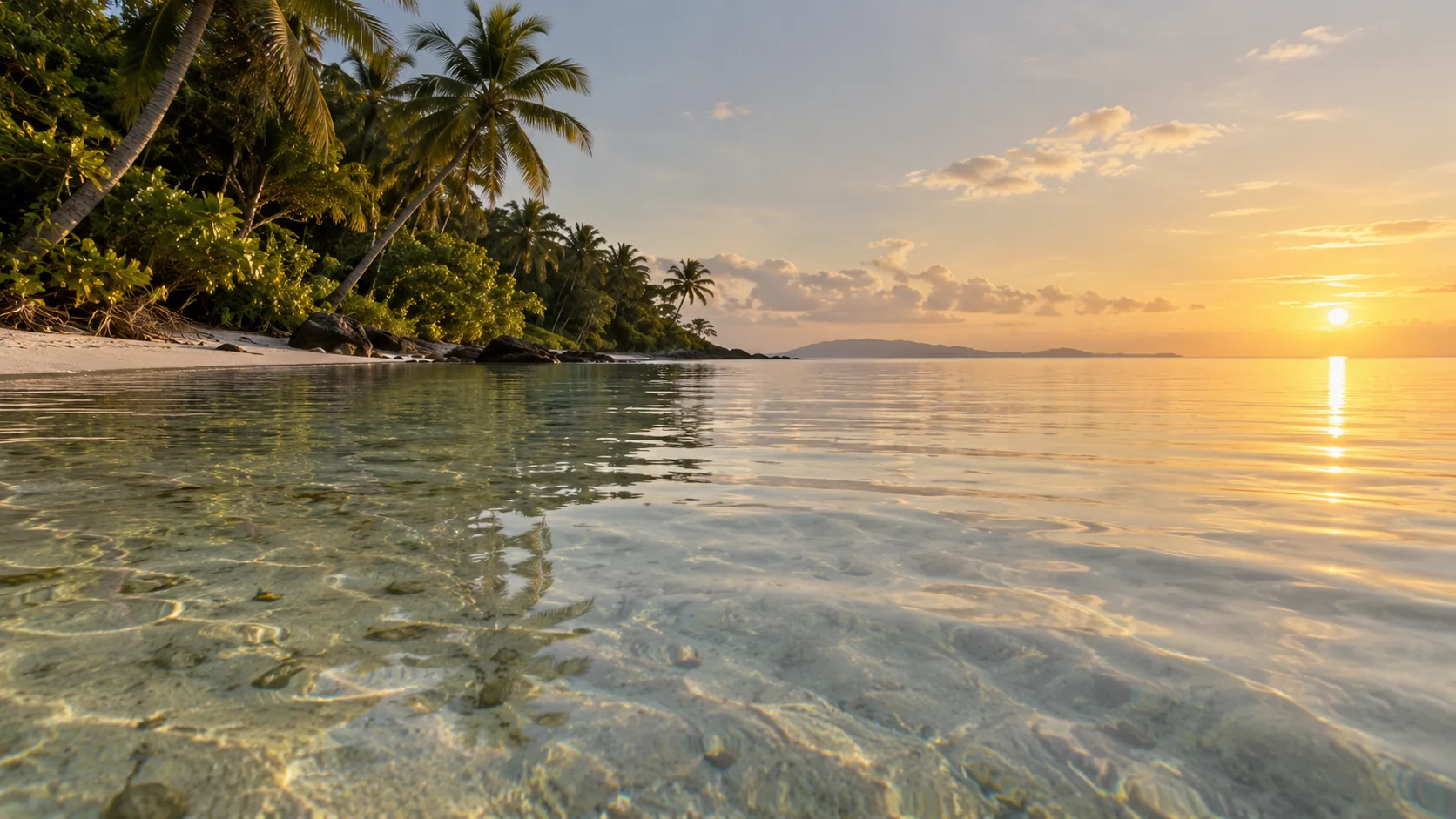
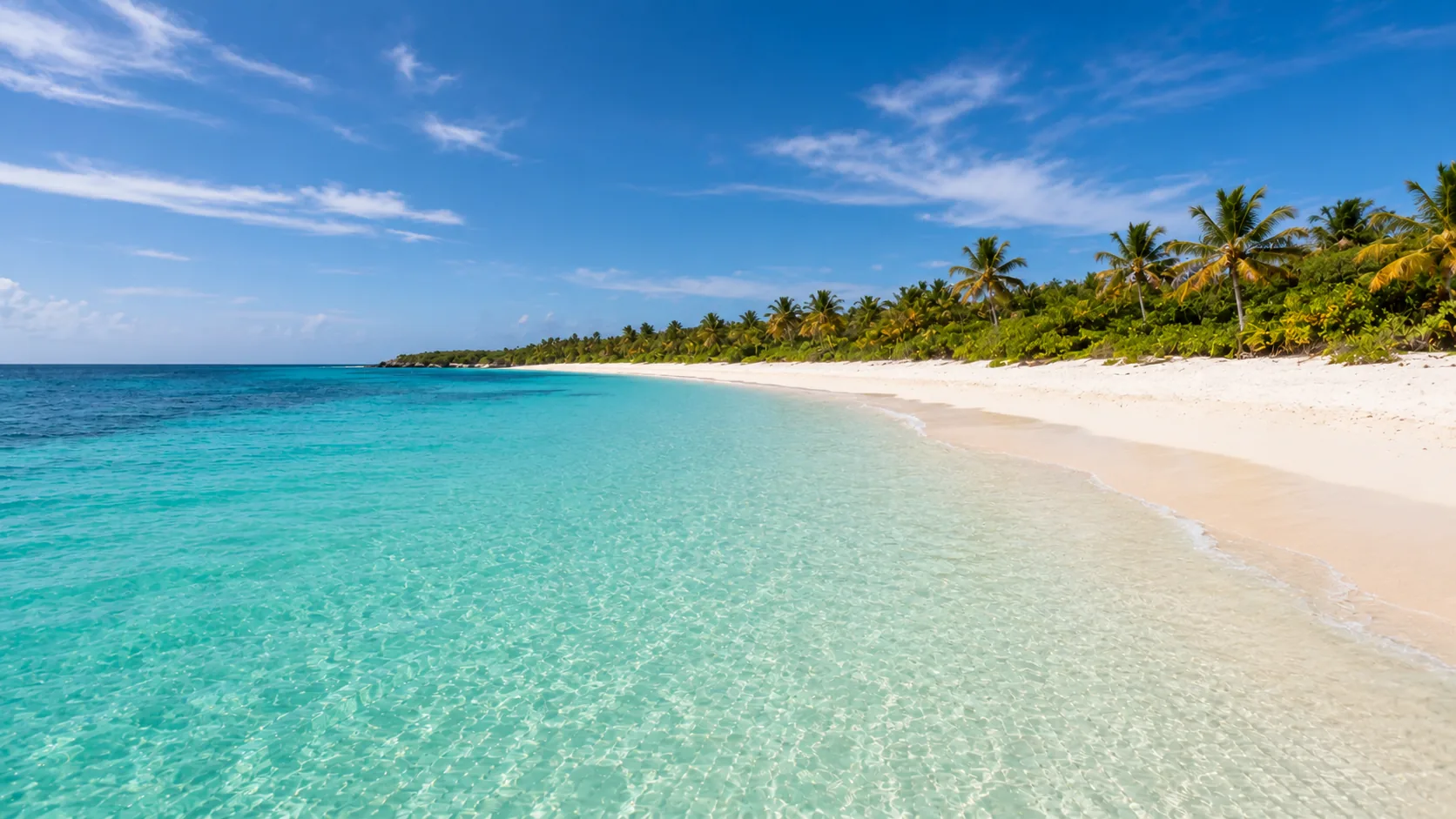
The water is shallow, warm and calm along most of this coast. Unglamorous, and exactly what you want when a four-year-old is learning to swim and a grandparent is getting back in the water after a decade.
Nobody minds children. A family arriving at seven is not a problem here. That sounds minor until you have travelled somewhere it is.
The mornings are long and reliable. Sunrise is early and the light holds for hours, which suits both the very young and the very old, usually the two people already awake.
You can do nothing, comfortably. Much of a good trip with three generations is time where nobody is doing anything in particular.
Yes, and for many groups the cenote turns out to be the most reliable swimming of the trip, because it does not care what the sea is doing.
A few things worth knowing. Cenotes vary enormously: some are open and pool-like, others are caverns reached by a ladder into the dark. For children and for anyone nervous in water, an open cenote is almost always the right first one. Depth is rarely obvious from the surface, so assume it is deeper than it looks. Life jackets are commonly available and are mandatory at some sites.
The rules about showering first and about sunscreen are not bureaucracy, and they are worth explaining to older children rather than just enforcing. We covered all of it, including why conventional sunscreen is restricted, in what to expect when you swim in a cenote.
Roughly, and with the obvious caveat that children differ more than these categories suggest.
Under4
Somewhere to swim within walking distance of where you sleep. Shade and naps decide the day.
5to 9
Snorkelling in calm water, cenotes, boat time, ruins in small doses if they are framed as an adventure rather than a lesson. Heat tolerance is still low.
10to 15
Diving lessons, longer excursions, a full day in Tulum. The age where the trip becomes genuinely shared.
Grandparents
And no obligation to join everything. The most common mistake is planning a trip where opting out means being left alone somewhere unpleasant.
The calmer months, if the school calendar allows it.
December to April is the most dependable weather of the year and also the busiest. Late April to early June and the second half of November are the sweet spot: warm, mostly dry, and noticeably quieter. May to August is hot enough that the heat becomes the main fact of the day with small children, and September and October carry the most rain and the highest storm risk.
Most families cannot choose freely, because school terms decide. If your dates are fixed, the thing worth optimising is not the month. It is where you stay, and how the day is shaped.
After enough trips, the shape is always the same, and it is worth planning for deliberately.
From 8am
Swimming or moving while it is still cool. The only window where the four-year-old and the seventy-year-old want the same thing.
Together
Around 1pm
Everyone eats together, and then the group splits. This is the hinge of the day.
The hinge
2pm to 6pm
Some nap, some read, some keep going. Forcing a shared afternoon is the most common way these trips go wrong.
Apart, same house
Evening
Usually where you are staying. Getting nine people into a restaurant at eight is a negotiation nobody enjoys twice.
Together
This is where a mixed-age group either works or does not, and it has very little to do with luxury.
A hotel splits the group into rooms and moves every shared moment into a public space. That is fine for a couple and quietly corrosive over a week with three generations, because there is nowhere that belongs to everyone. The afternoon split becomes people retreating to separate rooms rather than spreading out in the same house.
What a mixed-age group actually needs is unglamorous: a kitchen, so that breakfast is not a daily logistical event and a toddler can eat at six. Shade that does not have to be booked. Somewhere to swim that is steps away rather than a drive. Enough space that opting out of the afternoon does not mean being alone.
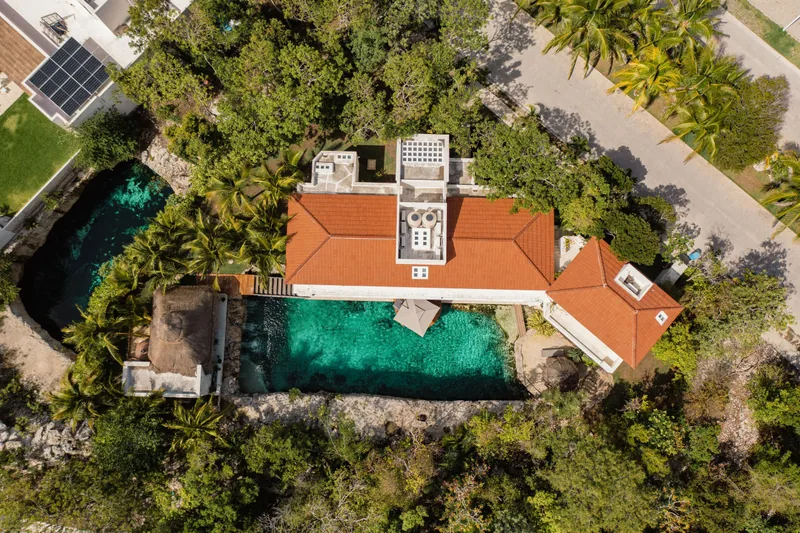
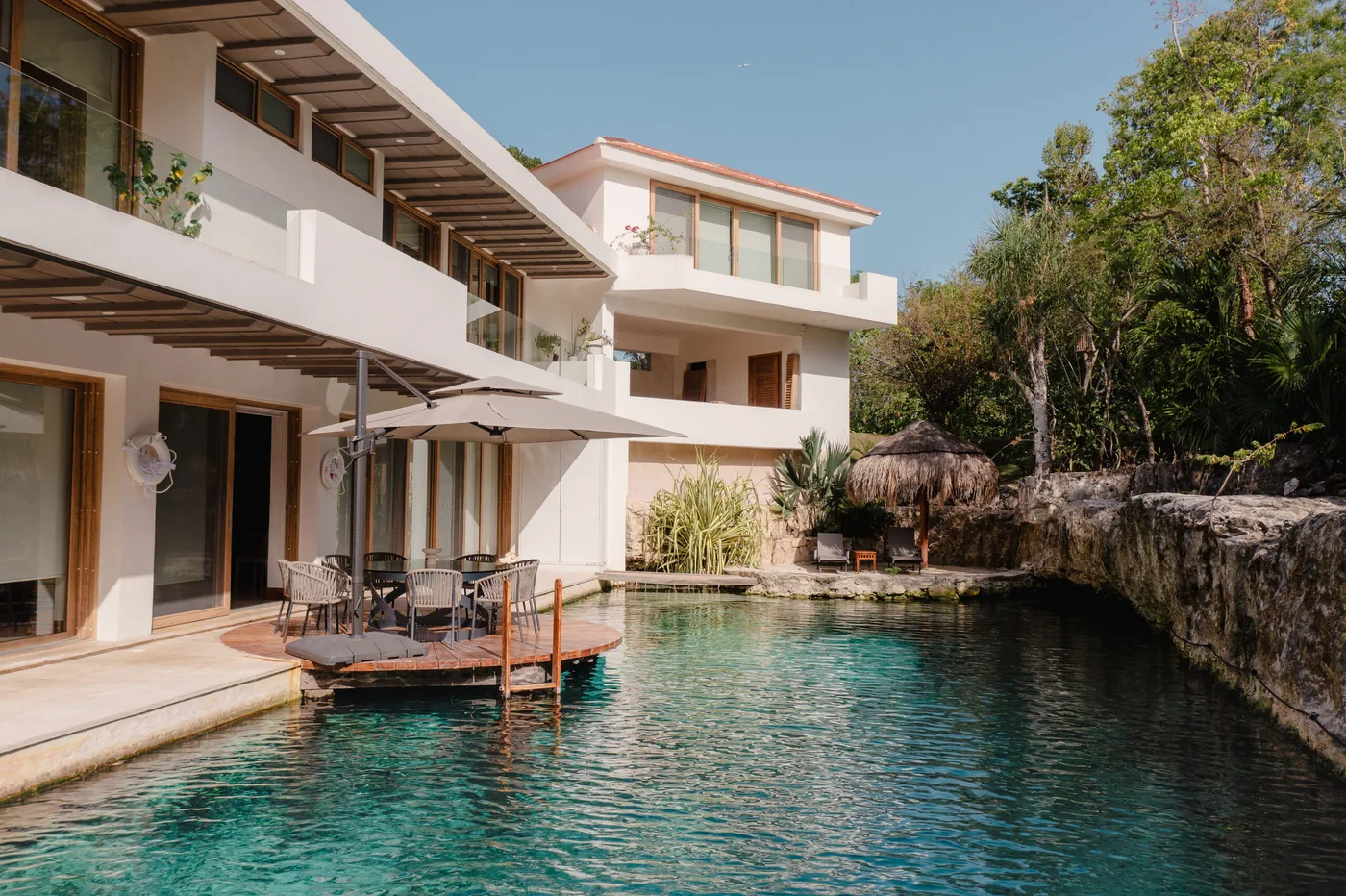
Two King Suites and two Double Suites, a full kitchen, a palapa with a grill, and a cenote inside the property. The cenote is the part that changes the arithmetic: swimming that works on the mornings the sea does not, without a car, a ticket or a queue.
If you are still deciding where on this coast to base a group, that is a different question and we answered it in Puerto Aventuras vs. Tulum vs. Playa del Carmen. And if Puerto Aventuras is new to you, the guide starts here.
Yes, with a plan that respects the heat. Calm shallow water and early mornings suit very young children well. The difficulty is midday between May and August, and long transfers at the end of a travel day.
About 75 minutes to Puerto Aventuras, roughly 75 km. A private transfer arranged in advance is usually simplest with luggage, car seats and a group.
Generally yes, in an open cenote rather than a cavern, with a life jacket. Depth is rarely obvious from the surface, so treat it as deeper than it looks.
Fewer than you think. One every three days is a realistic rhythm for a mixed-age group, and the days in between are usually the ones people remember.
Not for a stay based in a walkable community, and a private transfer plus occasional taxis often works out simpler. A car matters if you plan several independent day trips.
The afternoon. Heat, tiredness and three different body clocks peak at the same time, and groups that plan a shared afternoon activity every day tend to arrive home tired.
The trips that work are not the ones with the best itinerary. They are the ones that accept early on that a four-year-old and a seventy-year-old are not going to want the same afternoon, and stop treating that as a problem to solve.
Build the day around the morning everyone shares. Protect the afternoon for people to do different things in the same place. Keep one meal together and let the rest go.
That is a shape, not a schedule, and it is most of what separates a week that everyone enjoyed from a week that everyone survived.
Planning something for a group? Get in touch and we can talk through dates and what the house works well for.